
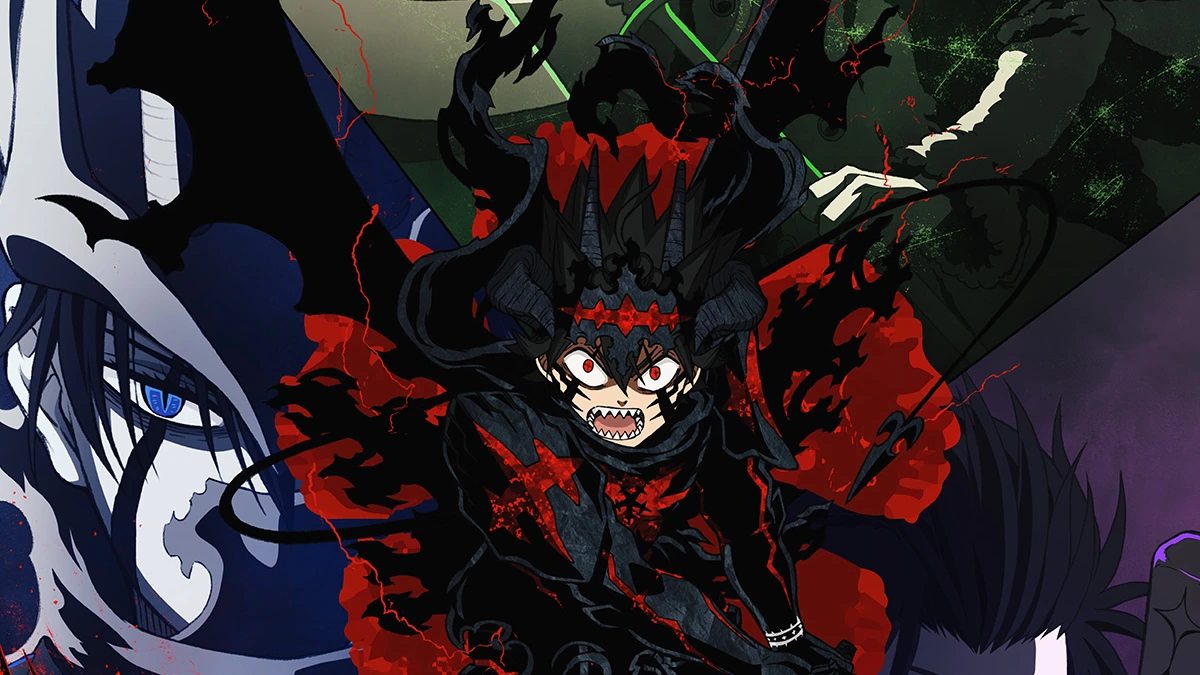
That distinction is what keeps Anti-Magic from flattening every fight. Asta has the strongest possible matchup advantage in a mana-based world, yet he still has to earn the contact that makes the advantage matter.
Anti-Magic erases magic, not reality itself
Liebe’s Anti-Magic naturally opposes mana. When it reaches a spell, it can disrupt and cancel the magical energy holding that spell together. This is why Asta can cut through projectiles, break defenses, and challenge techniques that would be much harder to overpower with ordinary magic.
 In the Black Clover manga, why can Yuno use two magic attributes?
6 min read
In the Black Clover manga, why can Yuno use two magic attributes?
6 min read
The important question is what remains after the magical component is removed. A construct maintained by magic can collapse when its spell is canceled. A normal rock, blade, or body does not vanish. If magic is reinforcing a physical strike, Anti-Magic can strip away that enhancement, but Asta may still have to deal with momentum, mass, and the attacker’s actual body.
His physical training therefore remains essential. Anti-Magic gives him the counter; strength, speed, ki sensing, and durability let him put that counter in the right place.

The first real limit is reaching the spell
Asta does not begin the series surrounded by a passive field that shuts down every spell nearby. For most of his growth, he has to block, cut, intercept, or project Anti-Magic toward the threat. Range and timing matter.
A fast mage can attack before he closes the gap. A wide-area spell may exceed what one swing covers. Multiple attacks can force him to choose what to stop first. His answer is not to discover a new “stronger negation” each time; it is to improve mobility, control, range, and the amount of Anti-Magic he can direct at once.
The Demon-Dweller Sword helps by sending Anti-Magic slashes over distance. The Demon-Slayer Sword is the straightforward tool for cutting and batting away magic, while techniques such as Black Divider extend the blade with a much larger mass of Anti-Magic.
So yes, the nullification property is extreme. Landing it is still part of the battle.

Each sword changes what Asta can do with the same power
Asta’s four weapons are not cosmetic upgrades. They solve different applications of the same Anti-Magic principle.
- Demon-Slayer Sword: the clearest option for cutting, blocking, and repelling spells, with the ability to extend its effective blade through concentrated Anti-Magic.
- Demon-Dweller Sword: gives Asta ranged Anti-Magic slashes and retains properties connected to absorbing and releasing energy.
- Demon-Destroyer Sword: its Causality Break can remove effects that a spell continues to impose after the initial casting.
- Demon-Slasher Katana: adds precision. Infinity Slash: Equinox demonstrates that Asta can select what his slash is meant to cut instead of simply destroying everything along the path.
This specialization is strong evidence that “Anti-Magic cancels magic” is only the starting rule. If cancellation were completely automatic, Asta would not need four tools whose value comes from applying Anti-Magic in different ways.
Causality Break is more than blocking a projectile
The Demon-Destroyer Sword is where the upper end of Asta’s nullification becomes much more interesting. Causality Break can absorb and remove a spell’s ongoing effects. During the elf reincarnation conflict, that matters because the problem is not an incoming bolt that can simply be sliced apart.
Later, Devil Union gives the same ability far more Anti-Magic to work with. Against opponents who use magic to maintain an altered state, Asta can wipe away the magic sustaining that state and force them back into something he can physically hit.
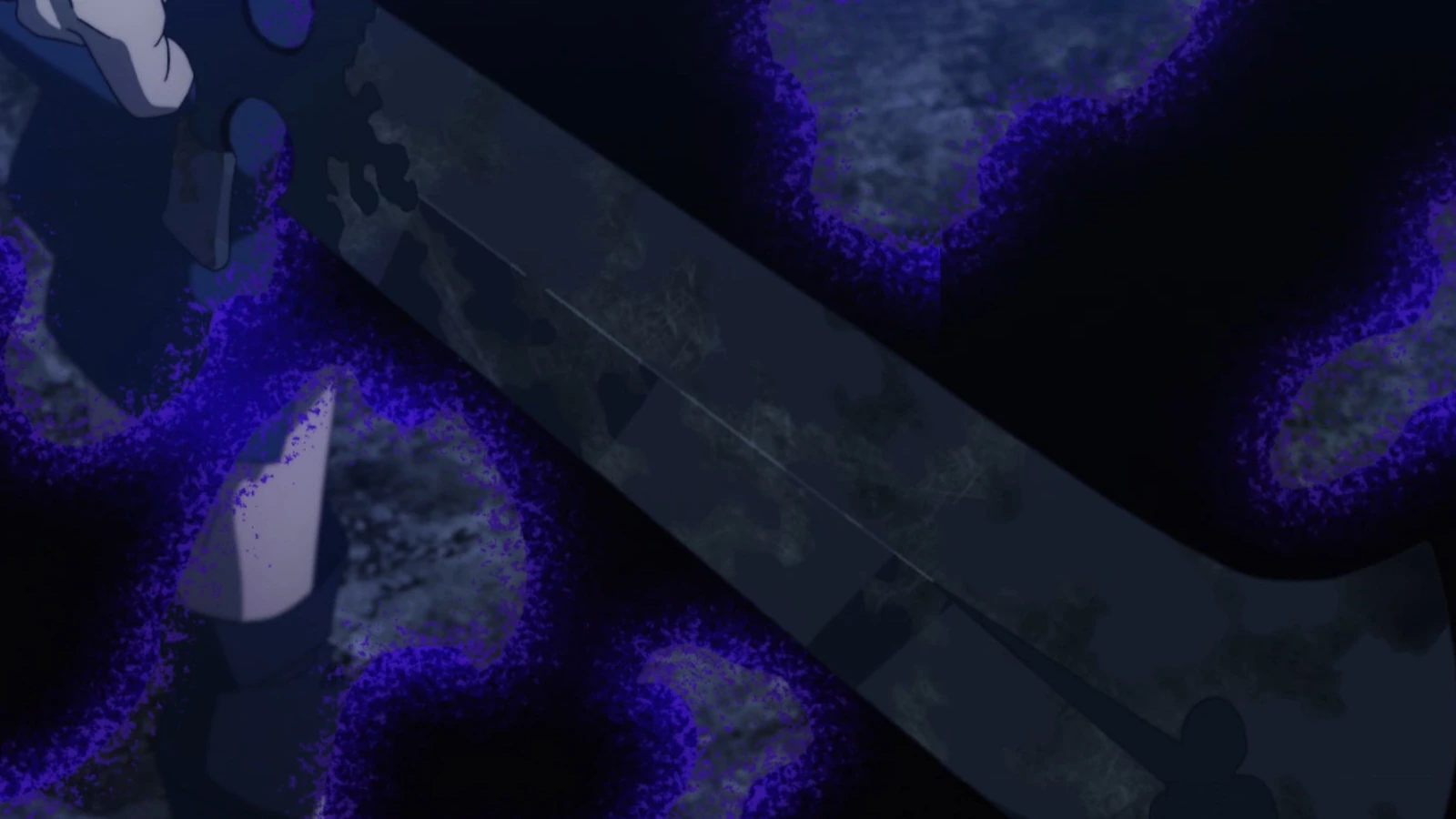
That does not safely translate into “Asta can cure every curse.” Black Clover treats curses, persistent spells, and condition-based effects as distinct problems. The reliable rule is narrower: when an ongoing effect is still tied to a spell that his Anti-Magic can reach, the Demon-Destroyer can attack the cause-and-effect link rather than merely blocking the original attack.
It does not grant Asta a universal rewind button for every physical consequence that has already happened.
Devil Union changes scale without removing the rules
Devil Union is the point where Asta and Liebe stop applying Anti-Magic through a relatively limited channel and begin coating Asta’s body and weapons with a far greater output. The result is larger coverage, more aggressive contact nullification, and much stronger versions of sword abilities he already possessed.

The underlying mechanic remains the same. Asta still needs range, timing, and control. His earliest Devil Union usage comes with a short operating window, and the manga makes his synchronization with Liebe part of the progression rather than treating the form as free infinite power. Their control improves dramatically, but combat opportunity still matters.
That is why top-tier opponents can threaten him without needing a special “Anti-Magic immunity.” They can pressure his timing, stay outside the right angle, create too much to cover at once, or force him to spend his strongest state before the decisive moment.
Can Anti-Magic nullify physical attacks?
Not simply because they are dangerous. If there is no magic involved, there is no supernatural energy for Anti-Magic to cancel. Ordinary matter remains ordinary matter.
The line gets blurrier when a fighter uses magic to reinforce a punch, weapon, or body. On contact, Asta can neutralize the magical enhancement and drastically reduce what makes that attack supernatural. But the attacker and the physical object still exist, which is why Asta’s own strength can remain relevant even after the magic is stripped away.
This is one of the cleanest checks on the ability. Asta is the ideal counter to magical systems, not a character who can replace every combat skill with one negation effect.
Is there a type of magic that is simply immune to Anti-Magic?
The manga does not establish a broad spell attribute that is inherently immune to Anti-Magic as a class. Instead, the story keeps making successful nullification harder to execute.
A massive spell needs enough coverage. A fast spell demands reaction time. A distant effect can stay out of reach. An ongoing condition may call for the Demon-Destroyer’s specific function. Physical debris or consequences can remain dangerous even after the magic behind them is gone.
The Demon-Slasher Katana makes the direction of Asta’s growth especially clear: his biggest improvement is not learning to “erase more categories of magic.” It is gaining finer control over what gets cut, where Anti-Magic goes, and how much of it is concentrated into one action.
Asta’s real ceiling is the application of Anti-Magic
On paper, an energy that opposes the foundation of almost every power in Black Clover sounds impossible to balance. In practice, the manga balances it by putting distance, timing, scale, physical consequences, and form limits between Asta and the point where his advantage can actually work.
Anti-Magic reaches all the way from canceling ordinary spells to erasing high-level devil magic. The Demon-Destroyer can dismantle ongoing magical effects, the Demon-Slasher can make a slash selective, and Devil Union expands the amount Asta can bring into contact with the battlefield.
But he still has to reach the target, survive what is not purely magical, and choose the correct application. That is the real limit. Asta breaks the rules of mana without breaking the combat logic built around those rules.

Sobre o autor
Caio Vinicius
Fundador do site e o tipo de pessoa que sempre tem um anime na lista pra começar “só mais um episódio”. Curto cultura pop, novidades da temporada e tudo que envolve esse universo top.
View all articles →