
The most important rule is the pair itself
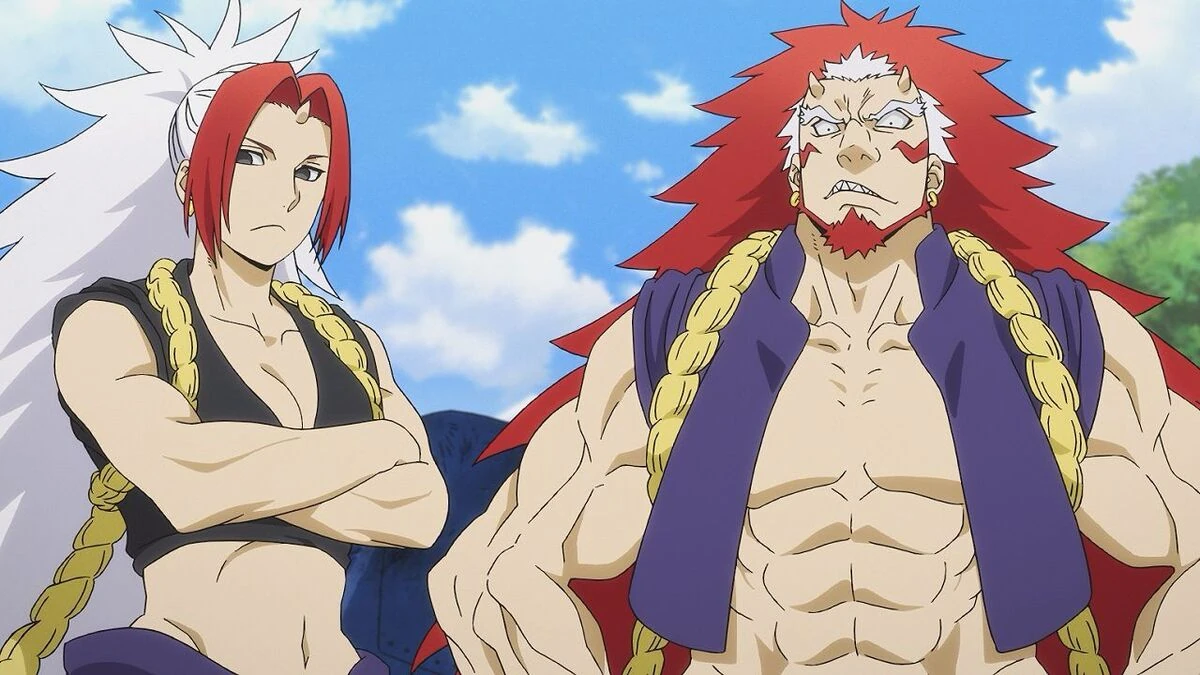
The official anime material repeatedly describes Tsugai as paired existences. That makes Right and Left the cleanest starting point: they are separate beings, but together they form the guardian pair that becomes Yuru's Tsugai.
Once that clicks, many of the stranger designs make more sense. A pair can be two bodies, two halves of one visual concept, two animals, or two opposing ideas. The series keeps the structure while constantly changing the expression.
That is why calling Tsugai simple “familiars” misses something. The question is not only what a creature can do. It is also why these two parts belong together and what their relationship contributes to the ability.
A contract establishes a master without erasing personality
Episode 2 gives the anime's clearest demonstration. During the attack on Higashi Village, Yuru awakens Right and Left, the village's guardian Tsugai, and the contract makes him their master. Yet neither one behaves like an empty weapon waiting for button inputs.
Left is openly combative. Right is loud, easygoing, and expressive. They talk, react to danger, and often show more knowledge of the supernatural world than Yuru does. The contract establishes a hierarchy, but it does not flatten them into obedient objects.
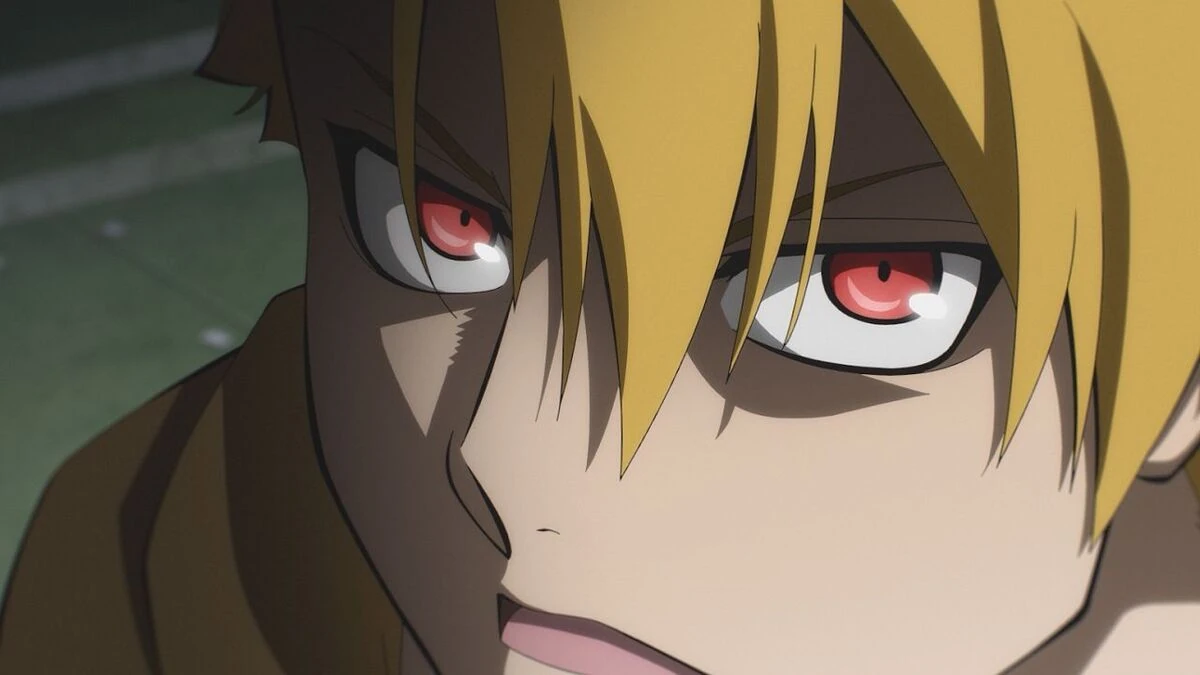
Episode 5 then pushes the idea further. The official story summary specifically credits Yuru's unusual trust and coordination with Right and Left for helping him survive the fight. That is a major clue about how the system should be read: having a powerful pair and knowing how to work with that pair are not the same thing.
It also makes matchups more interesting. Timing, information, and familiarity can matter alongside raw destructive ability.
A “pair” does not always look like two matching fighters
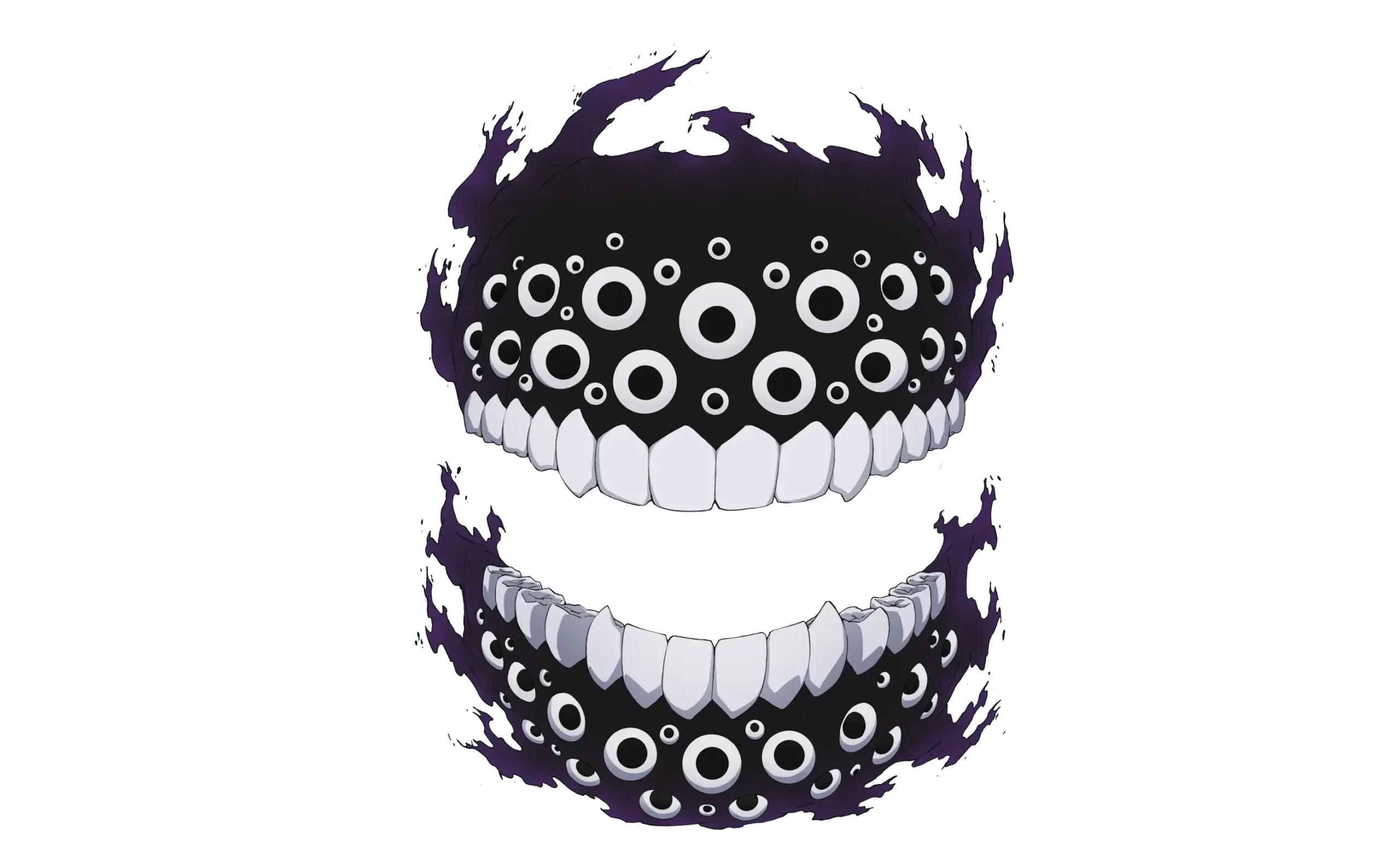
Gabriel is one of the best visual examples. Officially, Gabriel is Gabby’s Tsugai, but its design resembles an enormous mouth split into upper and lower halves, both covered in eyes and teeth. It follows the two-part rule without resembling Right and Left at all.
Hare and Tortoise go in the opposite direction. Haruo Kurotani's Tsugai is very literally a hare-and-tortoise pair, and the official profile even identifies the two individuals within the shared pair name.
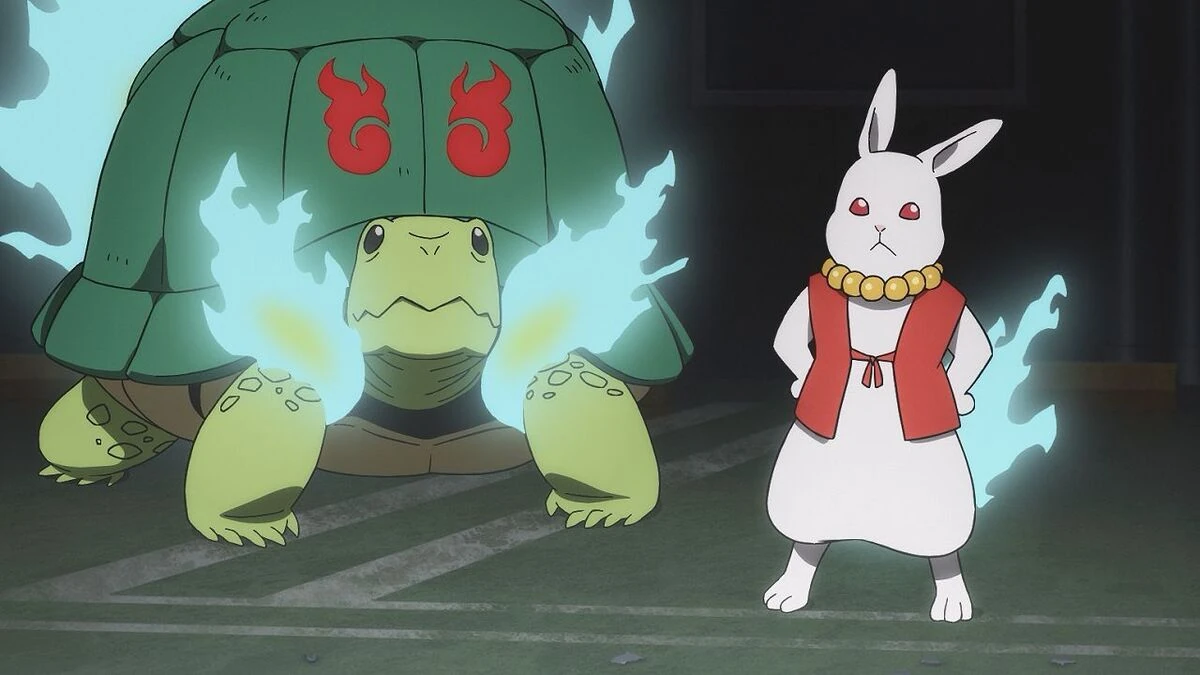
The fun part is that these are not just visual jokes. The contrast inside a pair can shape what it contributes to a battle. Learning a new Tsugai therefore means learning its internal logic, not merely memorizing a special move.
Asa proves that contracts can be broken
Yin and Yang show that a master-Tsugai bond is not necessarily permanent. The official character profile states that the pair originally belonged to Kenichi Hamura and is now Asa's Tsugai.
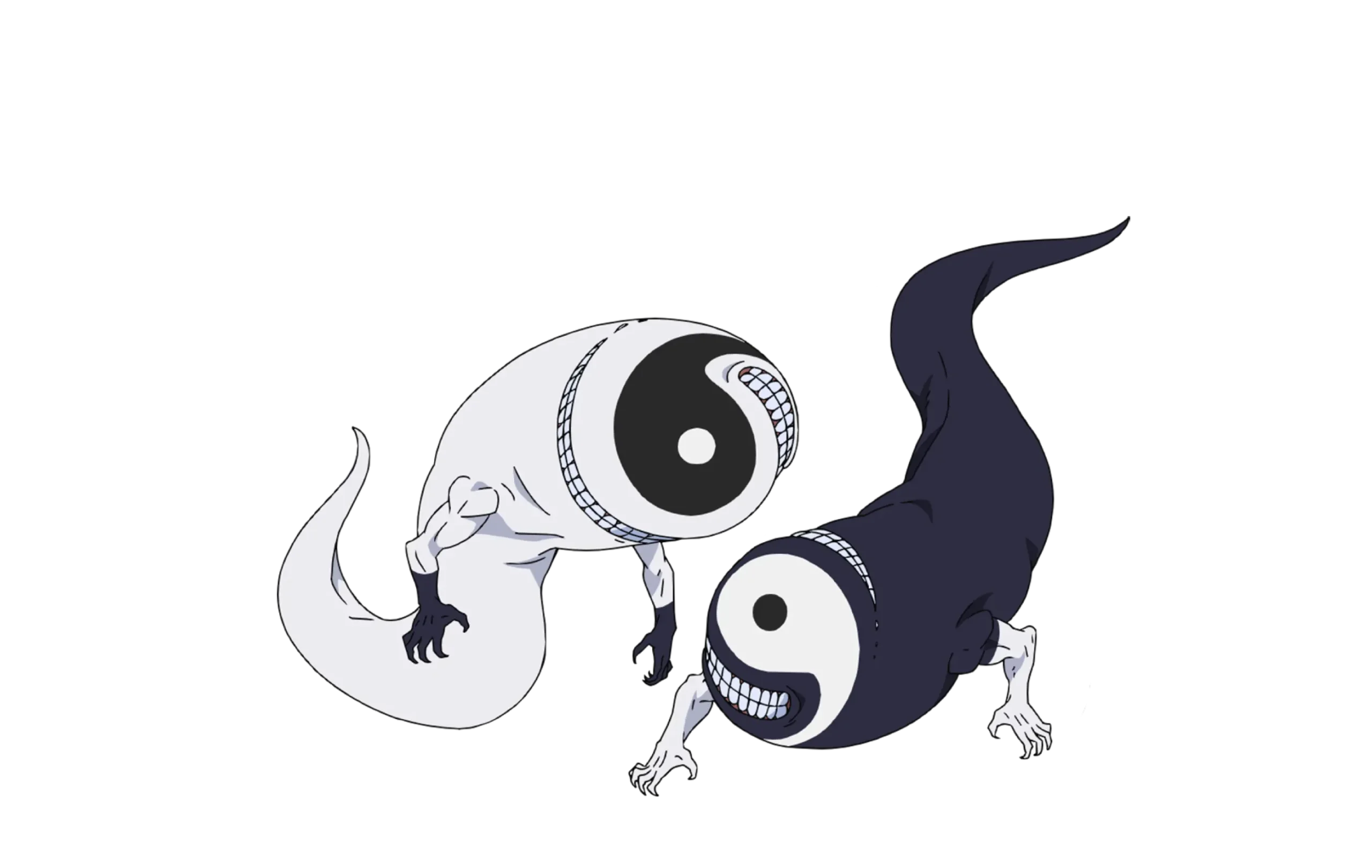
The important part is how that happens. In episode 6, Asa uses Break to destroy their previous contract. She then uses stored blood to become the pair's new master. The anime has therefore shown that a contract can be severed and replaced, but this is not presented as a routine trick available to every wielder.
Break is exceptional because it interferes with the rule that defines ownership itself. Treating that scene as proof that anyone can simply steal an opponent's Tsugai would flatten what makes Asa's ability so dangerous.
This also gives contracts real narrative weight. If the bond were cosmetic, breaking it would change very little. Instead, the moment Asa severs the old link, control of the pair — and the entire shape of the fight — can change.
Strength is about rules and circumstances, not just a tier list
By episode 18, the anime has introduced enough pairs to show how broad the concept can become. Fujin and Raijin are Shingo's Tsugai, and they put Yuru in serious danger while Right and Left are away from him.
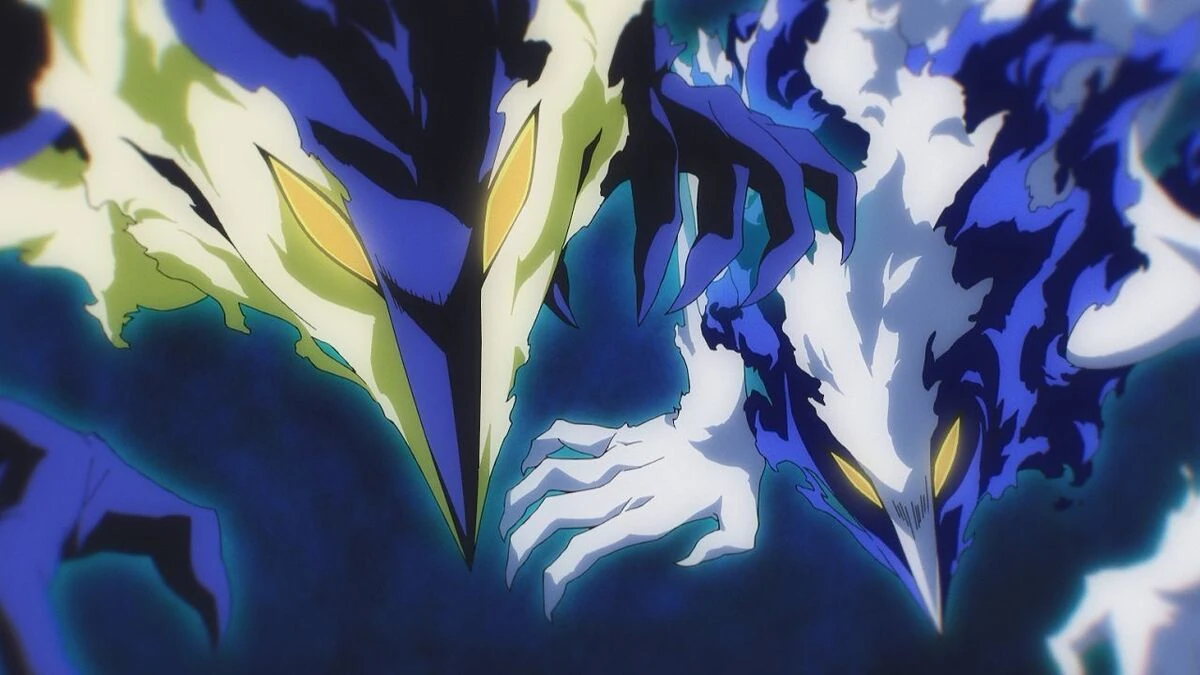
That scene fits a pattern the anime has been building from the start. Tsugai battles do not behave like a clean numerical ladder where the “stronger” pair automatically wins. A specific ability, the two halves' synergy, the master's decisions, and what each side knows can all change a matchup.
Right and Left become especially effective because Yuru learns to coordinate with them. Yin and Yang can create a severe tactical problem, but their contract is vulnerable to Asa's unique Break. Hare and Tortoise look almost comedic until their very specific usefulness matters in a fight.
So a strong Tsugai is not simply the one that can destroy the largest object. Compatibility, rules, knowledge, and teamwork are part of strength in this series. That is why the battles feel closer to puzzles built from conditions than to straightforward power-level comparisons.
What the anime has established about Tsugai so far
Through episode 18, the safest summary is:
- Tsugai are supernatural entities organized as pairs;
- a contract links the pair to a master;
- being contracted does not erase a Tsugai's personality;
- the “two” can be expressed through bodies, halves, animals, or complementary concepts;
- trust and coordination can materially affect how well a pair performs;
- Asa's Break can sever a contract, and the anime has already shown a pair changing masters;
- understanding a Tsugai's specific rule is usually more useful than assigning it a simple power number.
The basic premise is easy to state — a paired supernatural entity can be bound to a master — but the series keeps finding new ways to ask what that pair actually means. That flexibility is what turns Tsugai from a cool creature gimmick into one of the anime's strongest ideas.

Sobre o autor
Francine
Maratonista de animes de ação e viciada em desvendar sistemas de poder complexos. Se o roteiro mistura fantasia urbana e combate shinobi de elite, a Francine com certeza passou a noite em claro analisando cada episódio.
View all articles →