
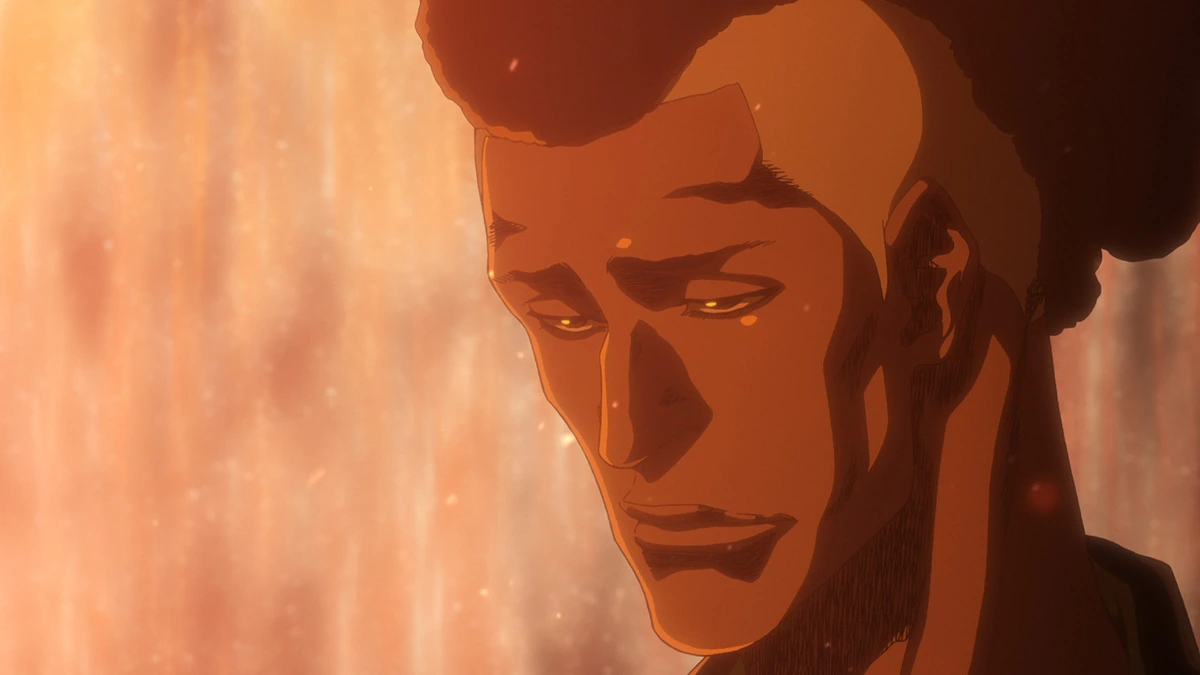
That distinction changes how Squad Zero’s performance should be read. Their ultimate weapons were not missing because they lacked them. They were locked behind a safeguard severe enough to match the danger those weapons posed.
The sacrifice does not power up the Bankai — it removes the lock
The easiest way to misread the scene is to treat Kirinji, Hikifune, and Nimaiya as batteries whose energy is transferred into Senjumaru. Official material describes something different: the oath ties the four lives to a restriction on their Bankai. As long as that condition remains intact, the seal remains in place.
 Why Does Old Man Zangetsu Look Like Yhwach in Bleach?
7 min read
Why Does Old Man Zangetsu Look Like Yhwach in Bleach?
7 min read
When the Schutzstaffel returns to the fight and turns the battle around, the three sacrifice themselves to break that restriction. Senjumaru does not gain a new Bankai and the story does not say she literally absorbs her comrades’ spiritual power. She gains access to the full release she already possessed.
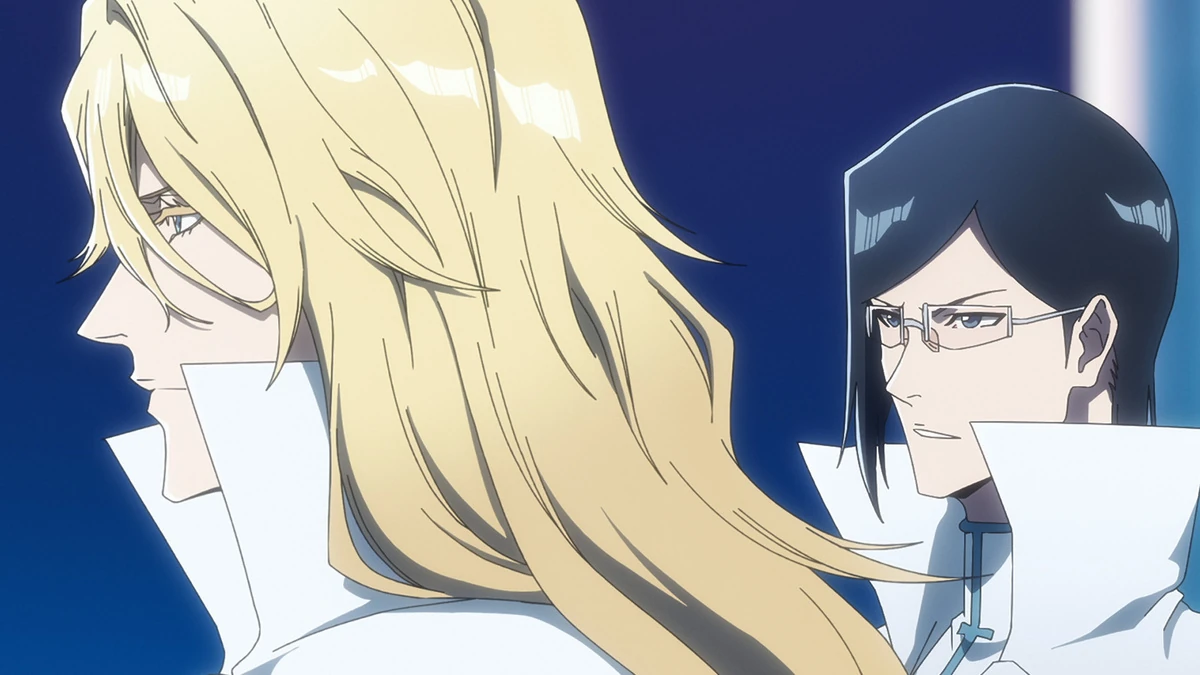
The severity of the oath makes sense for what the anime is trying to establish. If four Bankai released together can have consequences across the Three Worlds, a casual agreement not to use them would feel flimsy. Bleach makes the safeguard physical and irreversible: the Royal Guards’ own lives are part of the lock.
Why do three have to die instead of just one?
Because the system is built to leave only one of the four oath-bound guards free to release a Bankai without the collective restriction. Kirinji, Hikifune, Nimaiya, and Senjumaru are linked by the same condition. The battle takes that rule to its brutal endpoint: three lives must be removed before the fourth can operate without the seal.
That is why simply choosing Senjumaru while asking the other three to stand down would not be enough. The Blood Oath is meant to prevent the group from casually cycling through four unrestricted Bankai. Breaking it creates one surviving user and makes the choice impossible to take back.
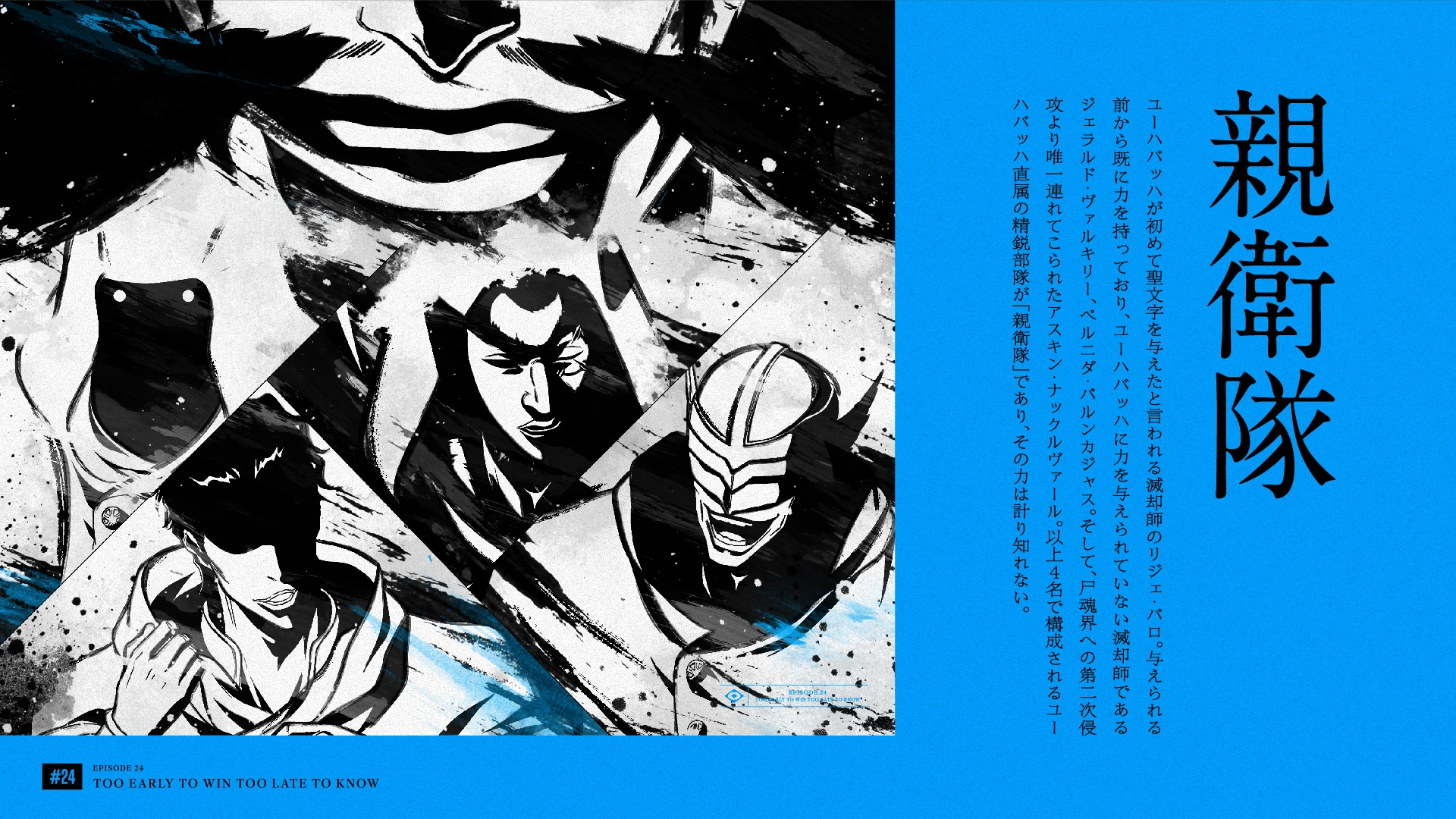
It is also important to separate this rule from Senjumaru’s Zanpakuto. Her Bankai does not inherently require three deaths as an activation cost. The deaths are a condition of Squad Zero’s Blood Oath, not a natural requirement of Senjumaru’s weapon.
Why is Senjumaru the one left standing?
The anime chooses Senjumaru as the surviving guard in this battle, but the oath never declares her the strongest of the four. It controls access to their Bankai; it does not establish an official power ranking between Kirinji, Hikifune, Nimaiya, and Senjumaru.
What makes the choice especially effective is the shape of Senjumaru’s ability. Her Bankai turns the battlefield into an enormous weaving display, producing different cloth-based effects for different enemies. Against several elite Quincy at once, that lets the same technique answer multiple opponents while still feeling completely tied to her identity.
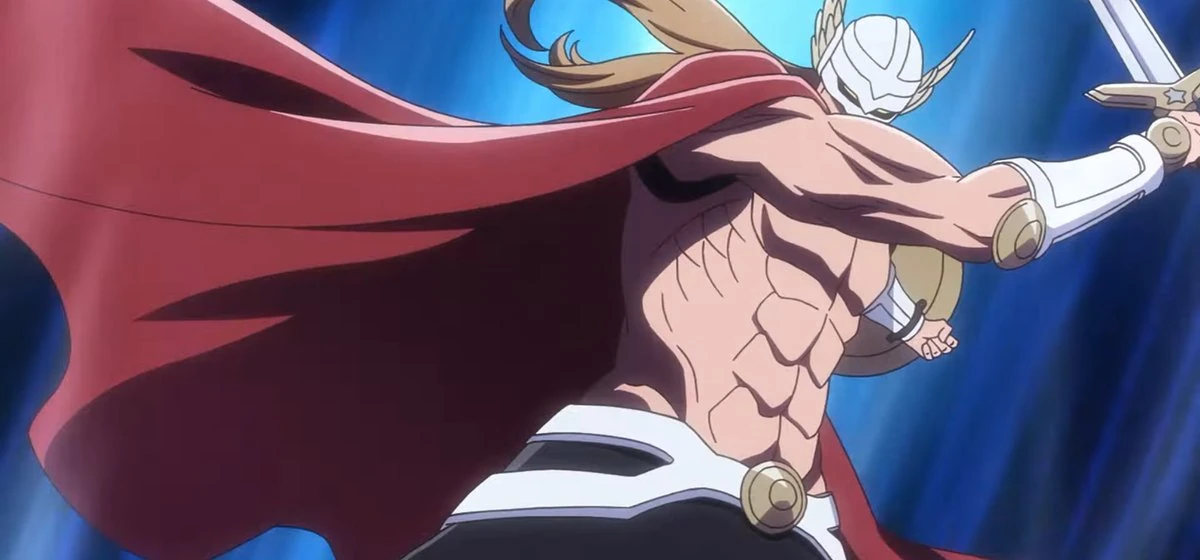
That is the clever part. Senjumaru is Squad Zero’s Great Weaver, and her Bankai does more than increase raw damage. It turns weaving itself into the structure of the fight. Each enemy is caught in a different pattern, so the power feels like an extension of the character rather than a generic final attack.
What about Ichibe Hyosube?
Ichibe is also a member of Squad Zero, which makes his absence from the sacrifice an obvious follow-up question. The safest answer is in the way the official rule is written.
The Blood Oath specifically identifies Kirinji, Hikifune, Nimaiya, and Senjumaru as the four guards bound by the seal. Ichibe is not presented as part of that pact. At the same time the four-person restriction is being broken, he continues his separate battle against Yhwach with Ichimonji.
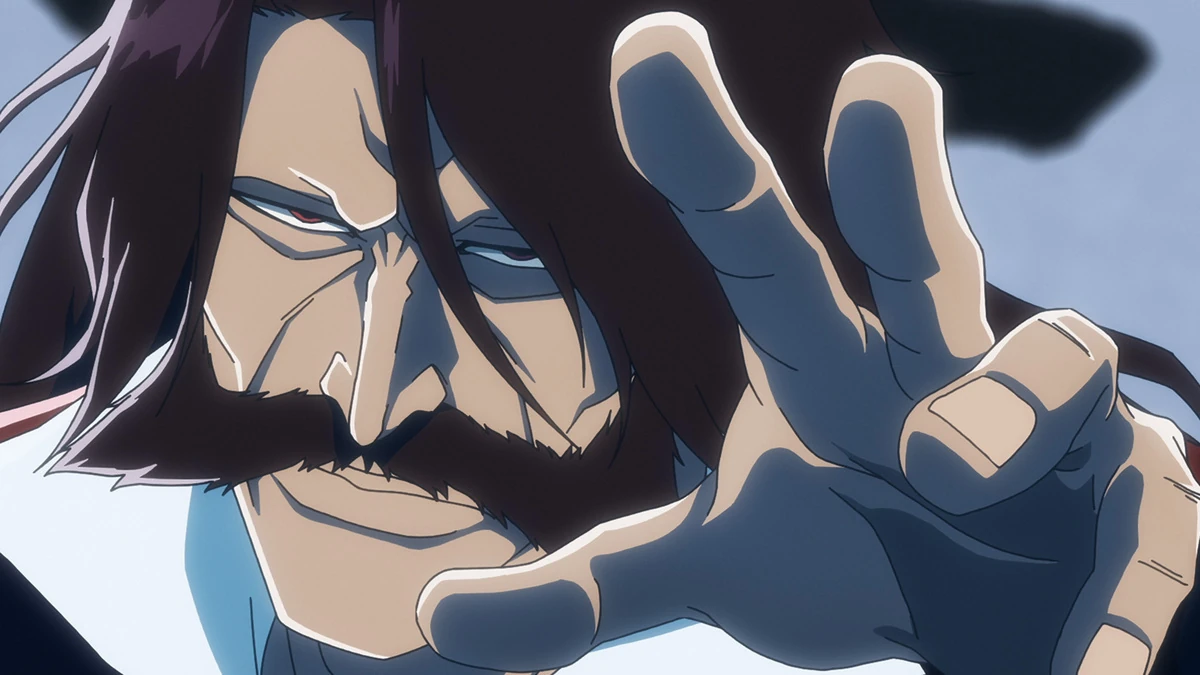
There are fan explanations for why Ichibe might be exempt, but the anime does not need an invented rule to answer the basic question. Canonically, the oath being discussed is a pact among those four guards, not all five members of Squad Zero.
What the anime added beyond the manga
Senjumaru’s Bankai sequence is one of Thousand-Year Blood War’s major anime expansions. In an official production interview, the staff explained that the scene was developed for the anime and that Tite Kubo contributed visual concepts to help shape the technique.
That matters because the addition does more than give the finale a spectacular new attack. The manga version left a difficult impression behind: if Squad Zero was supposed to be so extraordinary, why did its members seem to fall without bringing out anything comparable to Bankai when the Schutzstaffel pushed back?
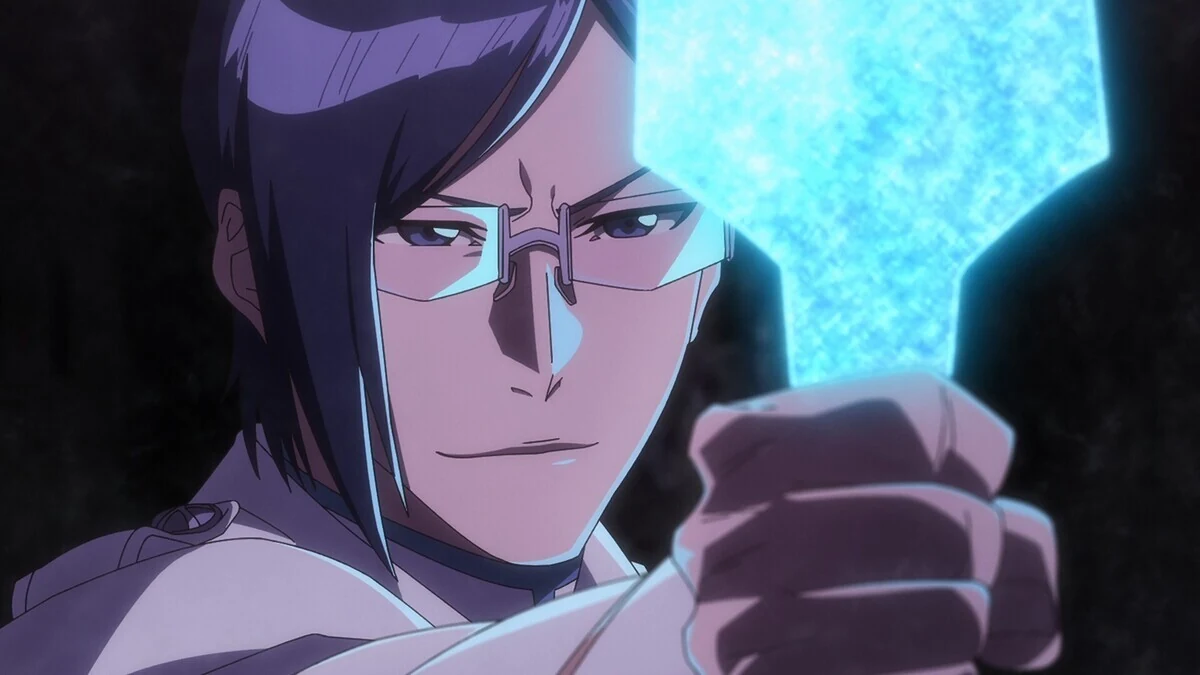
The Blood Oath turns that absence into a rule. The Royal Guards did have a much higher card to play, but using it came with a safeguard proportional to its danger. Instead of asking the audience to assume they simply failed to use their strongest option, the anime gives that option an irreversible cost.
The detail that changes how Squad Zero's defeat feels
Before the seal is explained, Squad Zero can look strangely overhyped. The guards dominate part of the confrontation, the elite Quincy recover, and the momentum collapses quickly. Once the Blood Oath is revealed, that sequence reads differently. For much of the fight, the four were operating under a limitation created precisely because their ceiling was considered dangerous.
That does not mean Squad Zero could defeat anyone whenever it wanted, nor does it make the Schutzstaffel's threat fake. Senjumaru's release does not erase every problem that follows. What changes is the scale we use to judge the Royal Guards.
The best part of the anime expansion is that the three deaths are not just there to give Senjumaru a dramatic entrance. They turn Squad Zero's reputation into a concrete rule with a concrete cost. Kirinji, Hikifune, and Nimaiya do not create Senjumaru's power by dying; they remove the seal that was keeping that power from being used.

Sobre o autor
Francine
Maratonista de animes de ação e viciada em desvendar sistemas de poder complexos. Se o roteiro mistura fantasia urbana e combate shinobi de elite, a Francine com certeza passou a noite em claro analisando cada episódio.
View all articles →